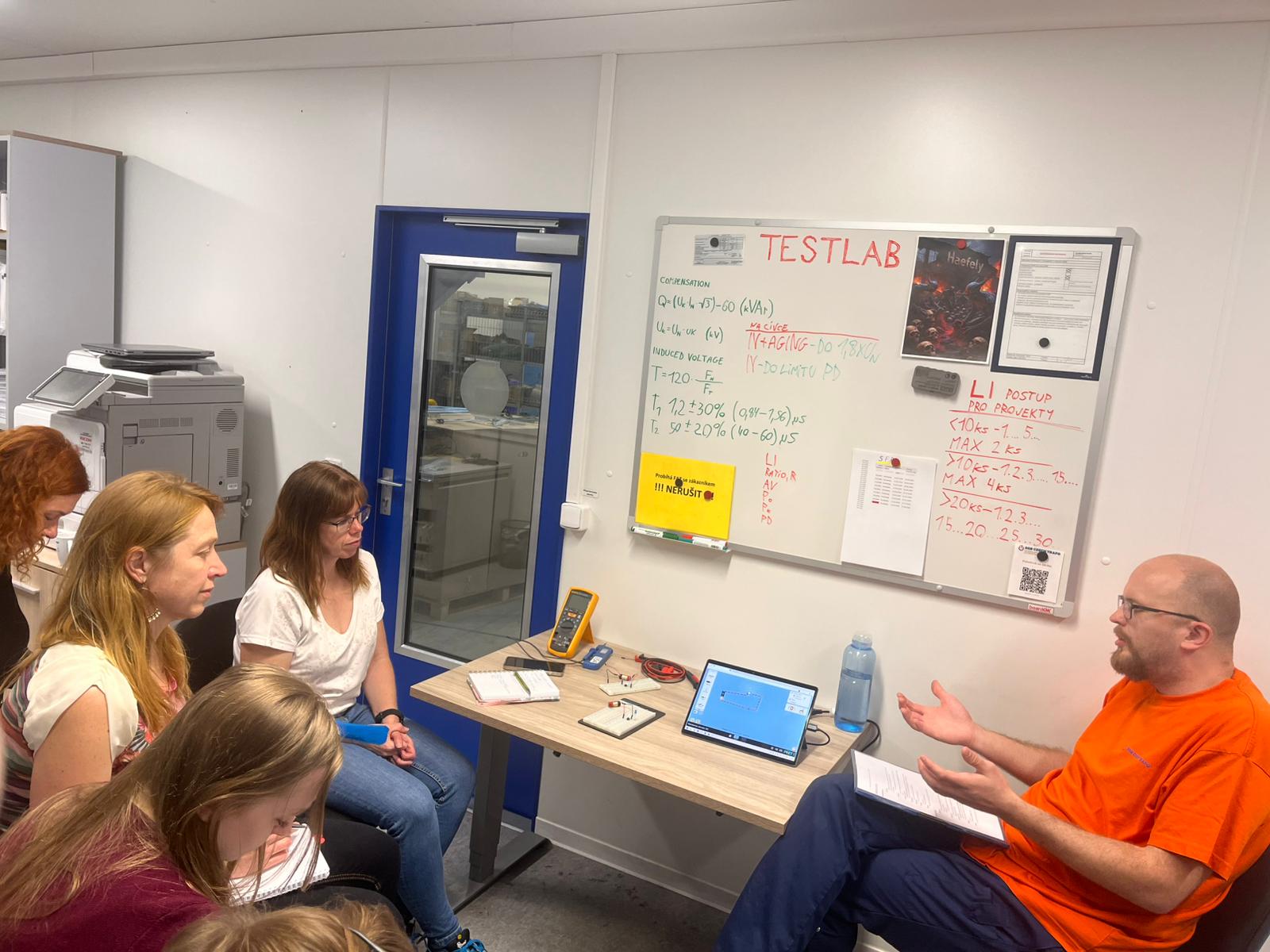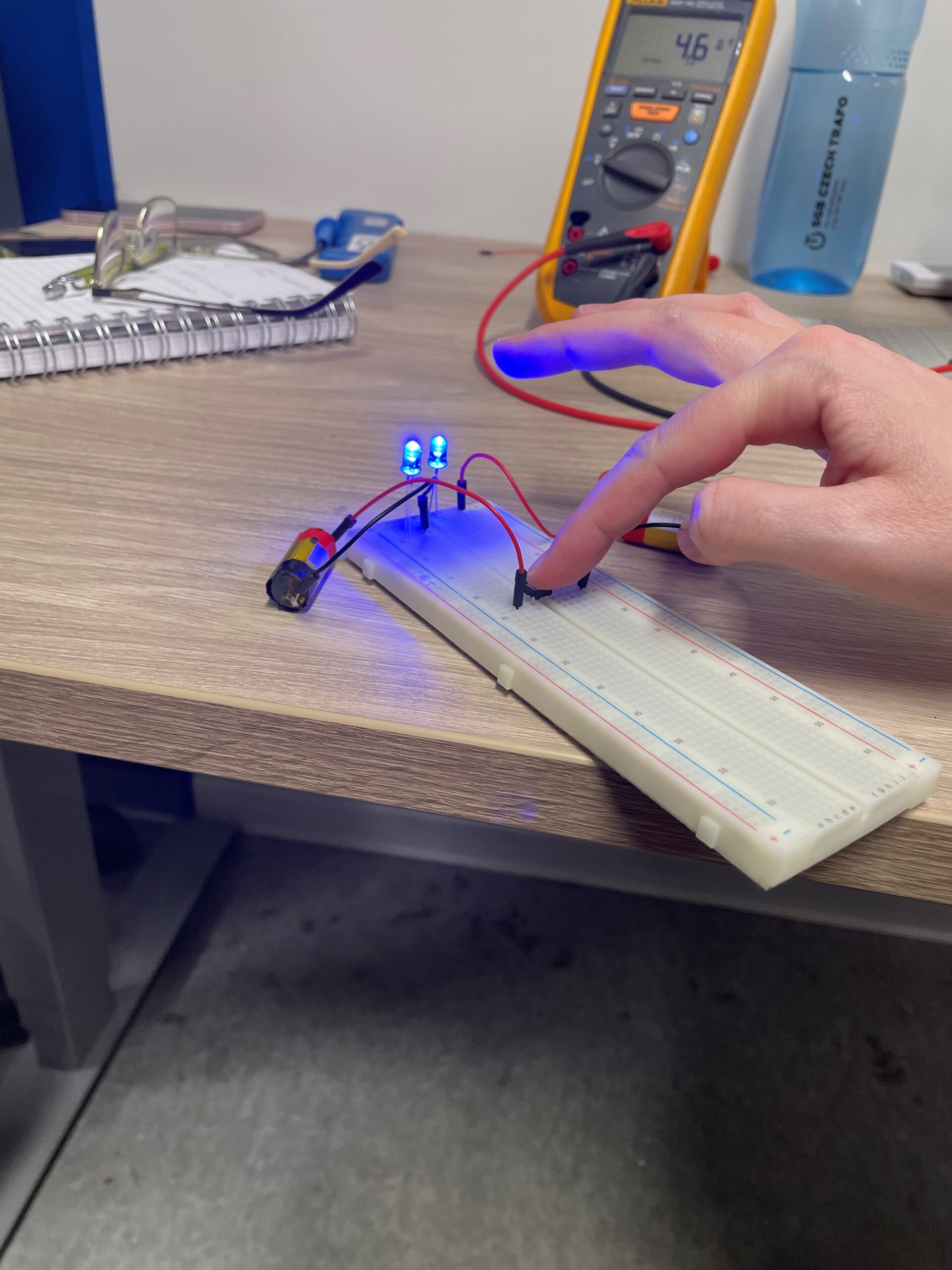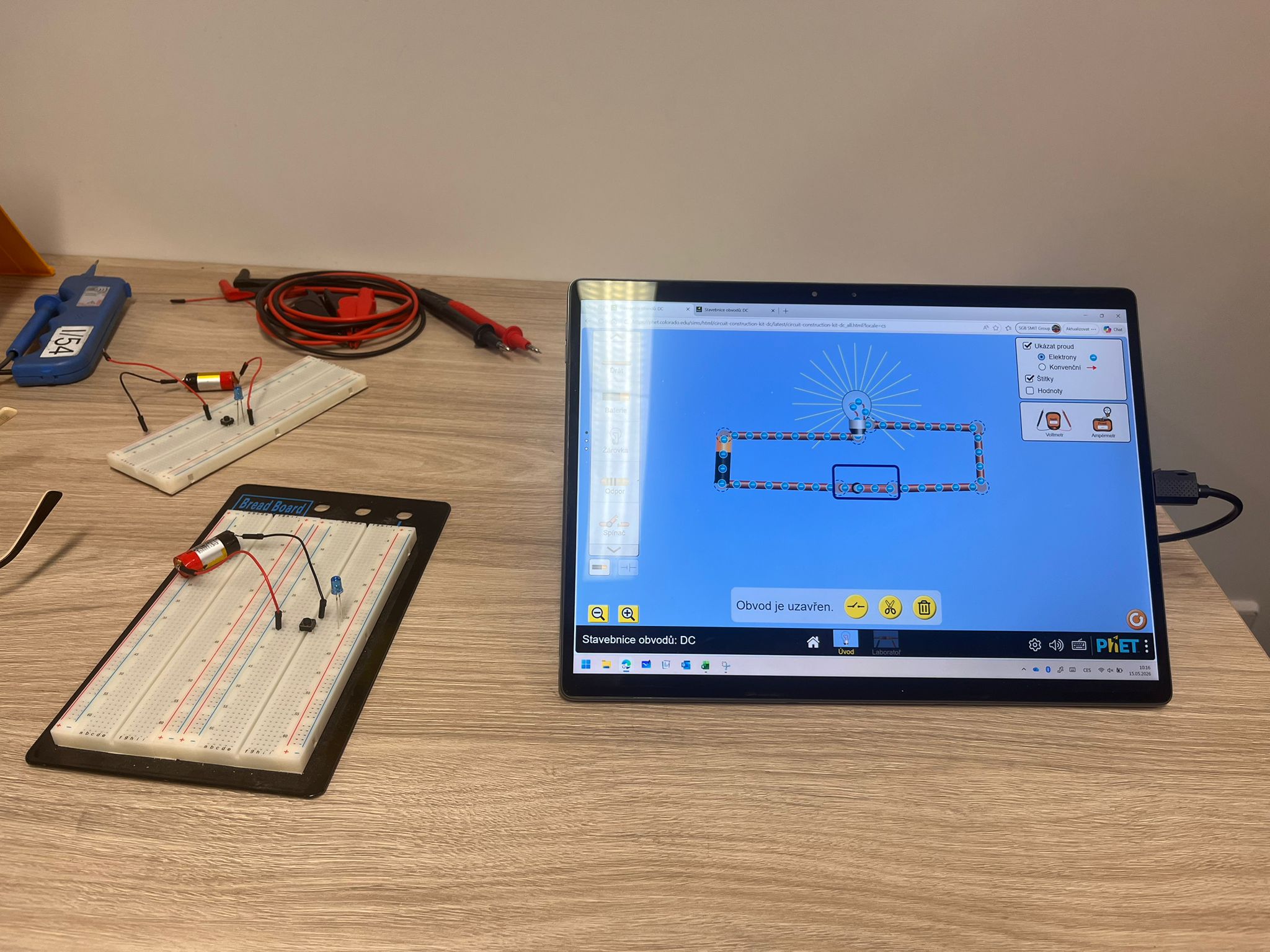
Electric circuits, current, voltage, and resistance – concepts most of us remember from school. At SGB Czech Trafo, we believe that technical expertise, safe working practices, and high-quality transformers are all built on these fundamentals. That is why we revisit them during the onboarding of new colleagues.
We all learned these concepts at school: current, voltage, resistance, and electric circuits. They appear in physics textbooks from an early age and are often associated with our first lessons in electrical engineering.
Yet every area of expertise is built on strong foundations.
That is why every new colleague who joins us without an electrical engineering background takes part in introductory technical training. This is not about complex calculations or advanced transformer design details. We start with the basics – principles that are essential for understanding what we manufacture every day in our facility.
Understanding an Electric Circuit Without Complex Equations
One of the easiest ways to understand an electric circuit is to compare it to flowing water.
Current: What Actually Flows Through a Conductor?
Electric current is represented by the symbol I and measured in amperes (A). In simple terms, it is the movement of electrons through a conductor. Just as water flows through a pipe, electrons flow through a wire.
We distinguish between two basic types of current:
- Direct current (DC), which flows in one direction,
- Alternating current (AC), which regularly changes direction and is used in standard power grids.
In our water analogy, current represents the flow of water itself or the amount of water passing through a waterfall.
One interesting fact often discussed during training: although warning signs usually say “High Voltage – Danger of Death”, the human body is actually harmed primarily by electric current, which flows through it.
Voltage: The Force That Drives Current
Voltage is represented by the symbol U and measured in volts (V). It is measured using a voltmeter.
If we compare an electrical circuit to a water pipe, voltage corresponds to the pressure that pushes the water through the system. In the waterfall analogy, voltage is the height of the waterfall – the greater the height, the greater the energy of the flowing water.
Resistance: An Obstacle in the Path of Current
Electrical resistance is represented by the symbol R and measured in ohms (Ω).
Resistance can be compared to a narrowing section of a pipe that restricts water flow. Every material offers a different level of resistance to electric current.
For example, copper has lower electrical resistance than aluminium and is therefore a more conductive material. However, transformer design depends on much more than conductivity alone.
The Electric Circuit: The Foundation of Everything
Every electric circuit must contain three essential components:
- a power source,
- conductors,
- a load.
Only when these elements are connected does the circuit become functional. Additional components such as switches, circuit breakers, or fuses can be added for control and protection.
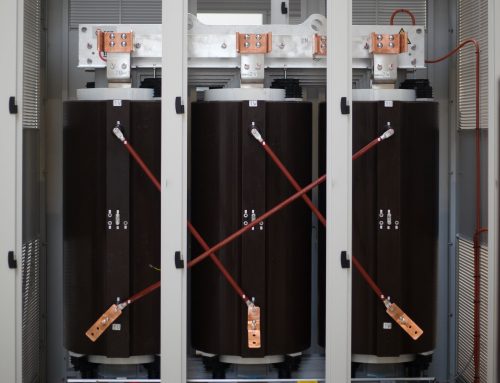
A simple explanation often shared during training is this: a transformer is essentially a conductor wound around a magnetic core. While this description greatly simplifies reality, it provides a useful first step toward understanding how transformers work.
Many new colleagues are also surprised by how electrical networks operate. A device connected to a socket does not draw all available current; it only takes as much as it needs. The limiting factor is often the conductor itself, which can only carry a certain amount of current. This is why protective devices such as fuses are necessary – they disconnect the circuit when safe operating limits are exceeded.
Why Material Resistance Matters
One topic covered during training is the materials used for transformer windings.
Many people automatically associate electrical engineering with copper. While copper does have lower electrical resistance than aluminium, conductivity alone does not determine transformer performance.
At SGB Czech Trafo, we use aluminium windings as part of a proven engineering concept rather than a compromise. In combination with silica-filled epoxy resin, aluminium offers excellent material compatibility and allows the transformer to achieve the required electrical performance while optimizing the overall design.
You can learn more about this topic in our article: Aluminium in Dry-Type Transformers.
Did You Know?
Training sessions also include interesting facts that help illustrate electrical principles:
⚡ A current of approximately 16–30 milliamperes passing through the human body can be fatal.
⚡ For an electrical spark to jump across a gap of just 1 mm, you need approximately 2,000 V.
⚡ Removing a sweater can generate electrostatic voltages of up to 30,000 V.
⚡ Traditional electricity meters work on a simple principle – the more current flows through them, the faster their measuring mechanism rotates.
⚡Standard distribution transformers are not designed for frequent switching. In our operation, for example, a transformer is limited to a maximum of 24 energizations per year, ensuring its long-term reliable operation.
⚡ When transformers operate together in the same system, they must meet several technical requirements. One of them is having the same vector group, which ensures proper cooperation between the individual transformers.
These “fun facts” often generate the most discussion and help new colleagues connect theory with real-world applications.
Every Expert Started Somewhere
In a transformer manufacturing environment, we work daily with concepts such as power, voltage, current, losses, insulation, and short-circuit withstand capability. Even so, we believe there is no shame in going back to the basics.
Quite the opposite.
Regularly revisiting fundamental principles helps us understand connections more clearly, work more safely, and collaborate more effectively across departments. Whether in production, sales, marketing, or administration, a shared technical foundation improves communication and helps everyone better understand the products we deliver to customers around the world.
Because one simple rule always applies: strong foundations build reliable transformers. And repetition truly is the mother of wisdom.