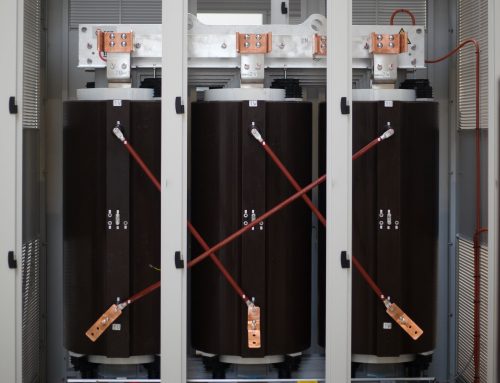
In our company, we place strong emphasis on continuous learning across departments. We believe that each of us is an expert in our field, and sharing knowledge helps us continuously improve the quality of our solutions.
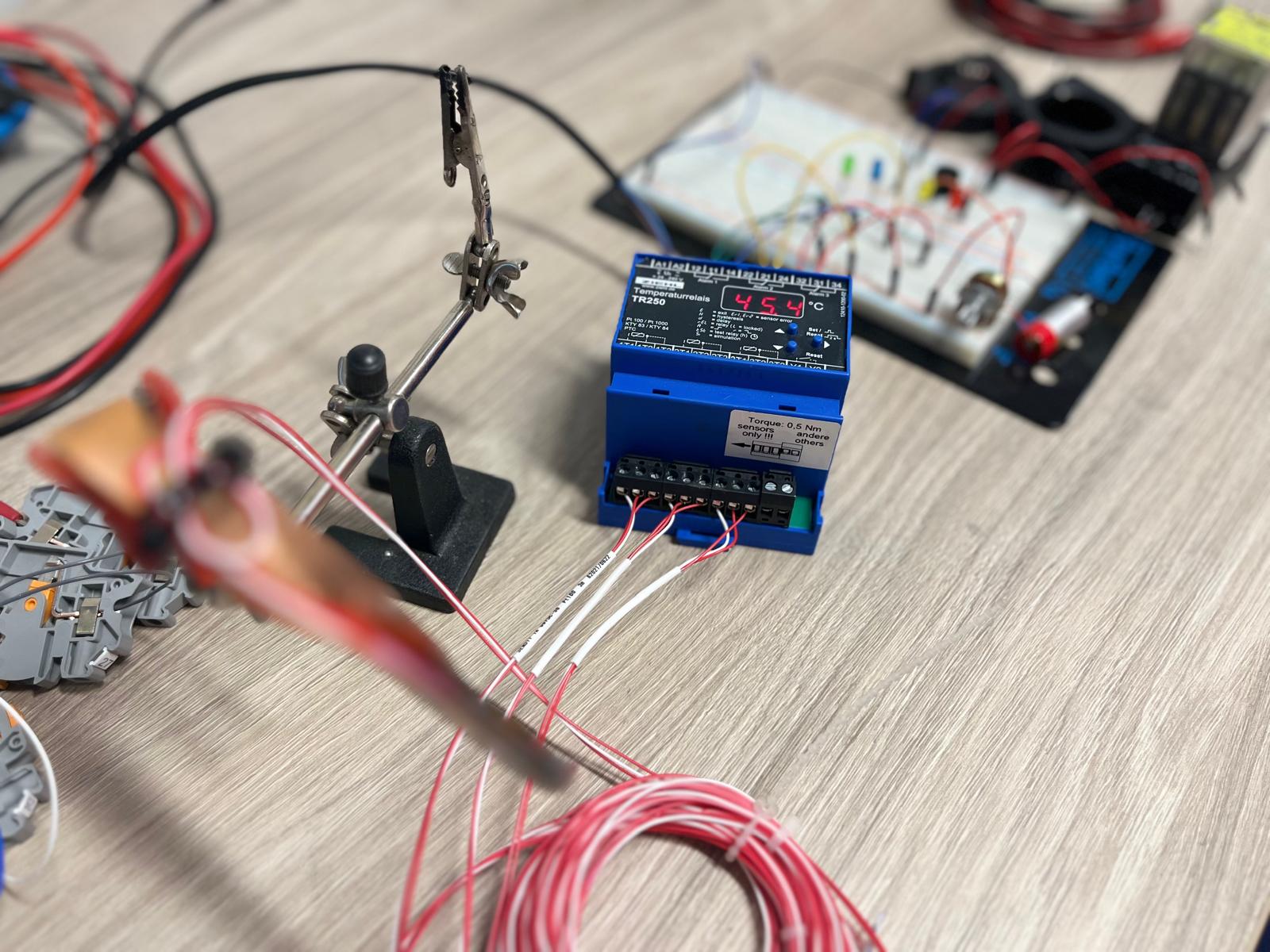
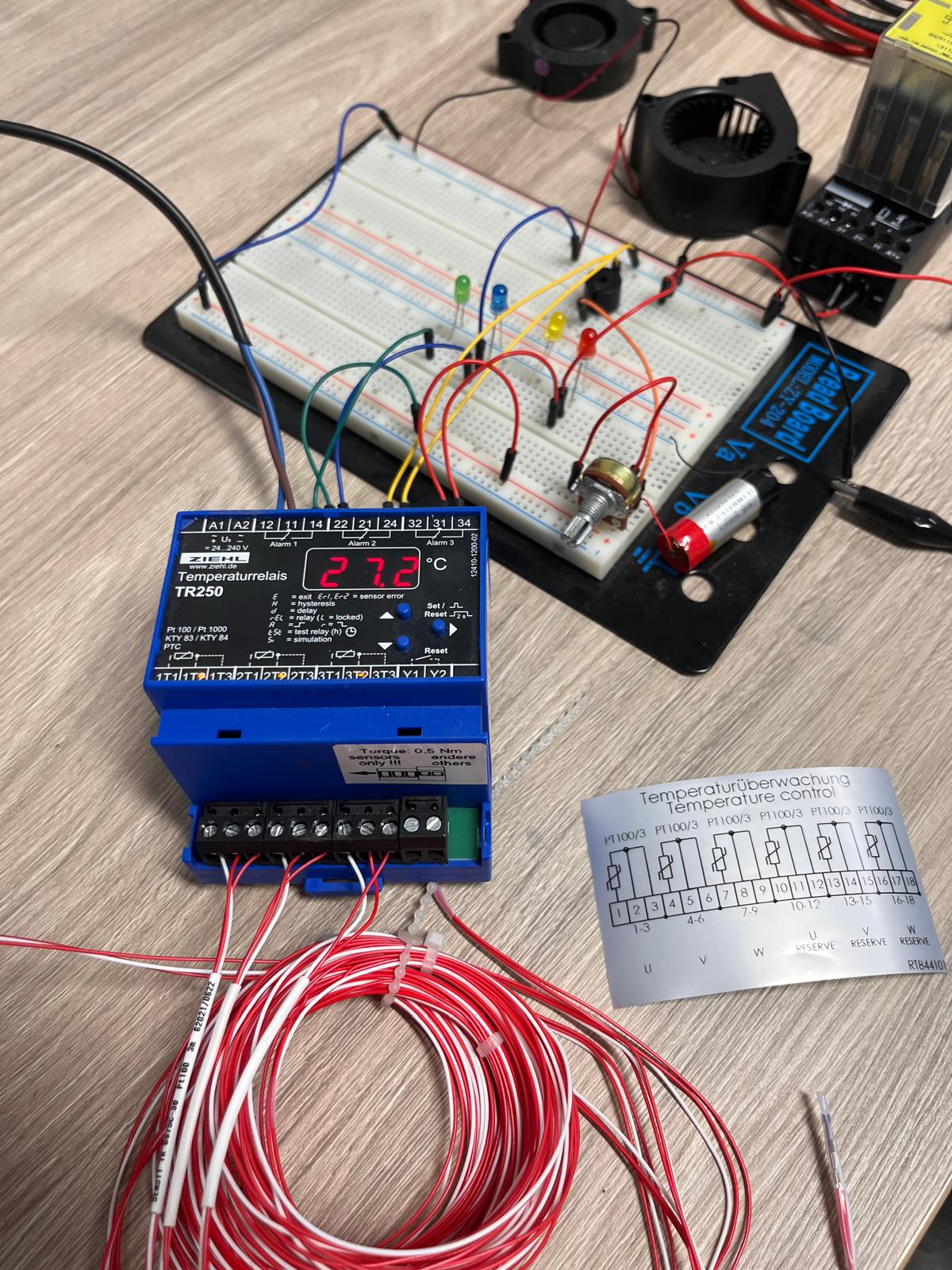
This time, as part of an internal training session, we focused on temperature sensors. The training was led by our test bay technician and provided a practical insight into how sensors work and the crucial role they play in protecting transformers.
Two Types of Sensors, Two Different Roles
In our transformers, we typically use two types of sensors – Pt100 and PTC. The selection depends mainly on customer requirements and market standards. While SGB Czech Trafo primarily recommends Pt100, a combination of both types is common, for example, in the German market.
Each sensor serves a different purpose. Pt100 is used for precise temperature measurement, while PTC acts as a protective device.
Pt100: Precision You Can Rely On
The Pt100 sensor, also known as Platinum 100, is a highly accurate resistance temperature detector (RTD). Its operation is based on the properties of platinum, whose electrical resistance changes with temperature.
At 0 °C, the resistance is exactly 100 ohms. As the temperature rises, the resistance increases, allowing the evaluation unit to determine the exact temperature of the transformer.
The operating principle can be summarized as follows:
- a platinum element changes resistance depending on temperature
- at 0 °C, the resistance is exactly 100 Ω
- the evaluation unit converts resistance into an accurate temperature value
Sensors are installed in the most thermally stressed areas, typically directly in the transformer windings, where they measure so-called “hot spots.” These are the areas most at risk of overheating.
If temperature limits are exceeded, the system can automatically activate cooling, such as fans. In critical situations, it can disconnect the transformer from the grid to prevent damage.
To achieve maximum accuracy, three-wire (standard) or four-wire configurations are used to eliminate the influence of lead resistance.
PTC: Simple but Effective Protection
Unlike Pt100, the PTC sensor does not function as a continuous measuring device. Instead, it acts as a temperature protection element.
Under normal conditions, it has very low resistance. However, once the temperature reaches a critical threshold, the resistance increases sharply. This sudden change signals the protection relay to react immediately.
Its behavior can be described in three steps:
- low resistance at normal temperature
- reaching the critical (reference) temperature
- sharp resistance increase triggering protection
In transformers, especially dry-type units, PTC sensors are embedded directly into the windings. Typically, a set of three sensors is used, each monitoring one phase. If any phase overheats, the protection system responds.
The reference temperature is selected based on the insulation class. In our case, with class F insulation, the threshold is 140 °C. PTC sensors are made of ceramic materials and are highly reliable under long-term load conditions.
However, they have limitations – due to slower thermal response, they cannot protect against sudden short circuits, but they are ideal for detecting long-term overload.
A Combination That Makes Sense
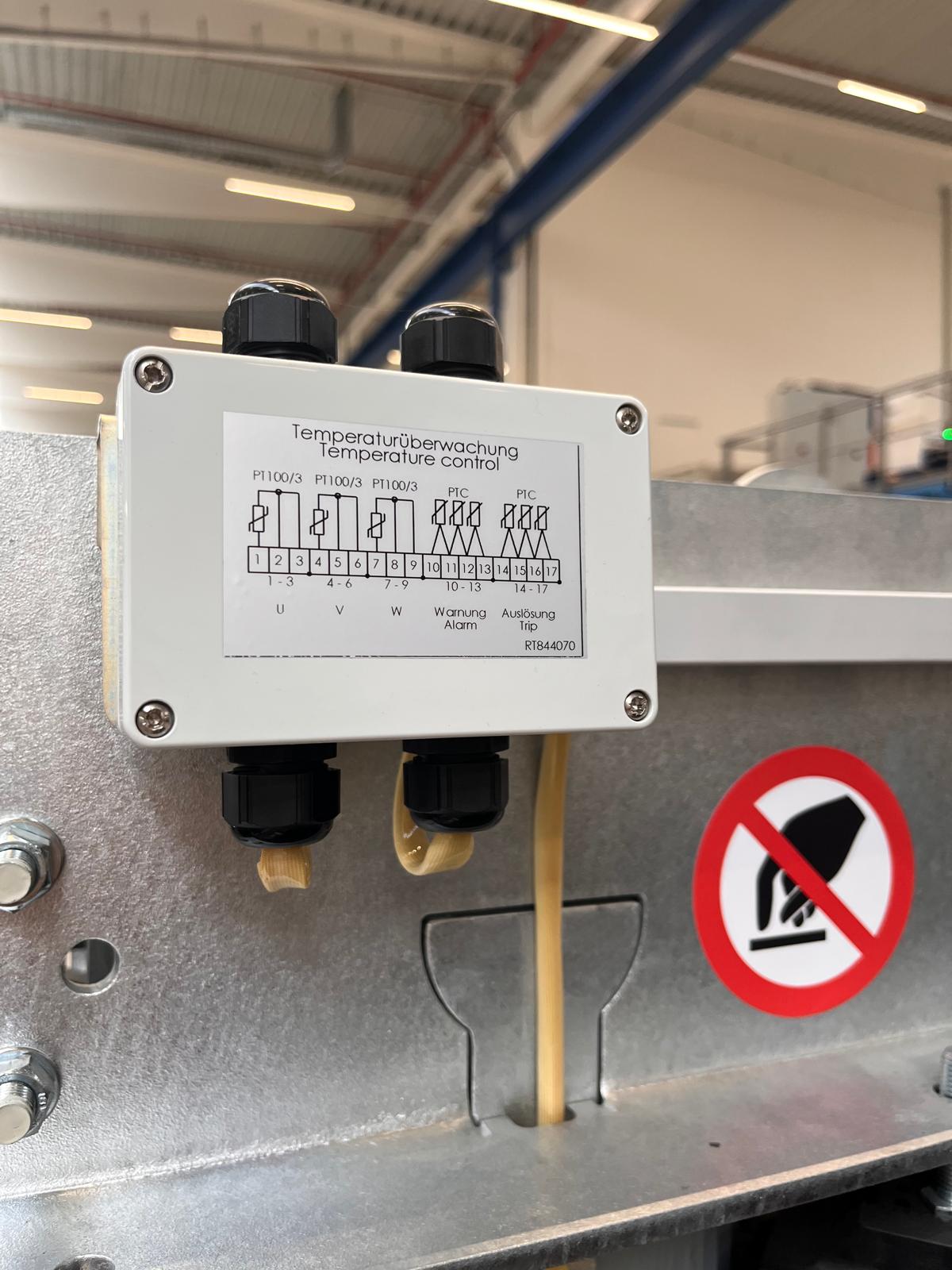
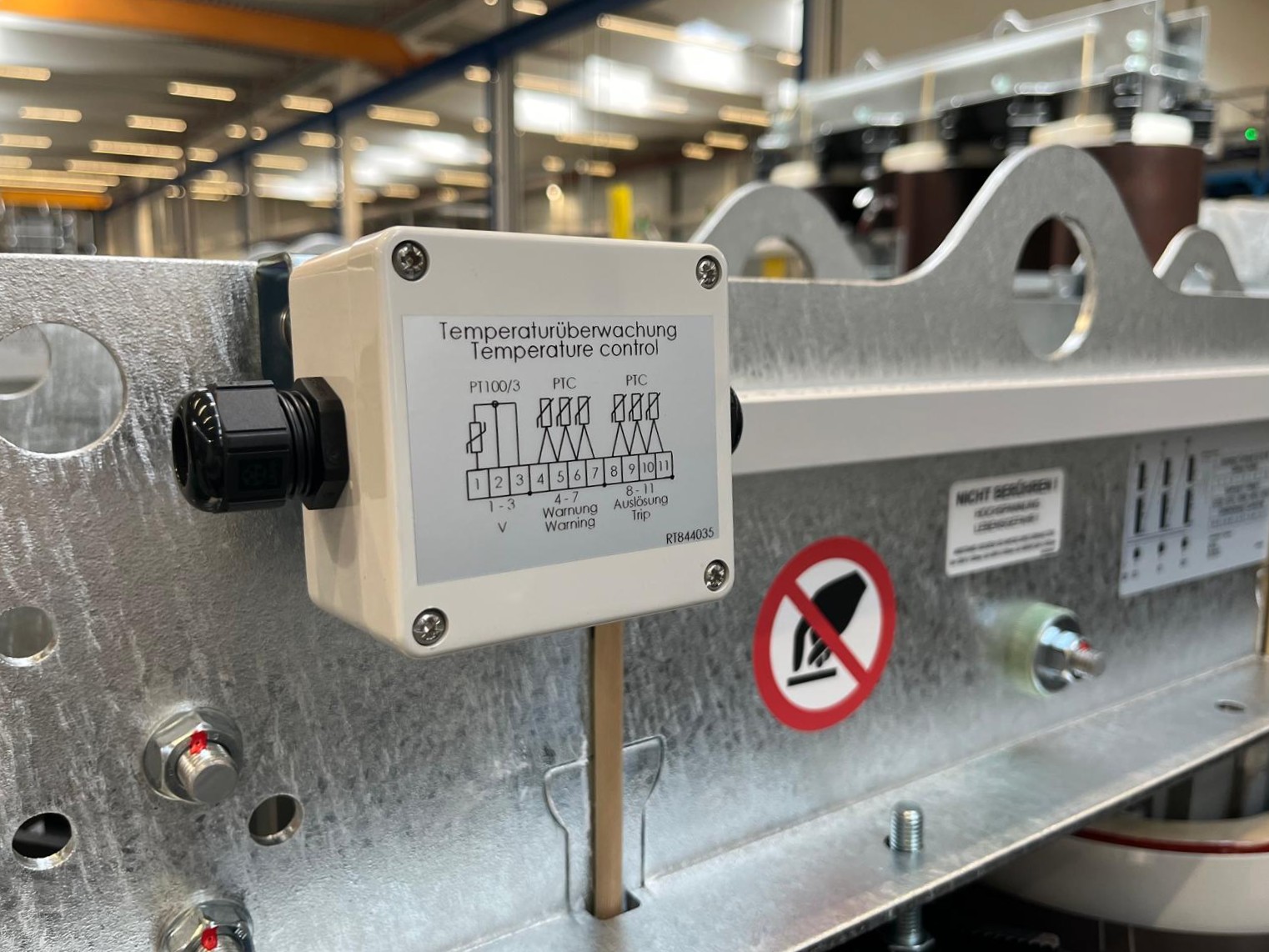
In practice, a combination of both sensor types is often used. A typical example is the configuration used in the German market, where two PTC sensors and one Pt100 are applied.
This approach combines the advantages of both technologies – precise measurement and reliable protection.
A Combination That Makes Sense
The choice of sensors directly affects other system components. All sensors are connected to a terminal block, which must be sized according to their number.
From the terminal block, the customer connects a relay that acts as a control unit. This is where temperature thresholds are set, for example, for activating fans. It is therefore important to select the correct relay – for instance, the MSF 220K does not support Pt100 sensors.
Some customers believe that an additional sensor is needed to control the fans. In reality, this is unnecessary. Data from existing sensors is fully sufficient for cooling control.
Conclusion
Temperature sensors are an inconspicuous yet essential part of every transformer. While Pt100 provides precise monitoring data, PTC ensures fast response in critical conditions.
The right combination of both types, together with properly selected components, is key to safe and reliable operation.